Bringing the views of Grayling, Moyal-Sharrock and Stroll together, I argue that in On Certainty, Wittgenstein explores the possibility of a new kind of foundationalism. Distinguishing propositional language-games from non-propositional, actional certainty, Wittgenstein investigates a foundationalism sui generis. Although he does not forthrightly state, defend, or endorse what I am characterizing as a "new kind of foundationalism," we must bear in mind that On Certainty was a collection of first draft notes written at the end of Wittgenstein's life. The work was unprogrammatic, sometimes cryptic. Yet, his exploration into areas of knowledge, certitude and doubt suggest an identifiable direction to his thoughts.This sounds interesting, too bad I don't have access.
Recognizing Targets: Wittgenstein's Exploration of a New Kind of Foundationalism in On Certainty - Robert Greenleaf Brice (via Methods of Projection)
Showing posts with label epistemology. Show all posts
Showing posts with label epistemology. Show all posts
Wednesday, December 17, 2008
Wittgensteinian foundationalism?
Sunday, November 23, 2008
conversation

M: Last night I talked about what it means to experience thinking. Did you want me to explain what I meant by that?
S: I guess so.
M: Well, I said, "I'm more interested in practical knowledge but theoretical knowledge has some practical value."
S: Right, and I really didn't see how that was relevant to what we were talking about.
M: What were we talking about initially?
S: I was talking about how I learn by doing.
M: Oh yeah, and I said, "I think everyone actually learns by doing but some people fool themselves into thinking they know things without the relevant practical experience."
That's really not a good statement by itself because there's a specific type of experiential knowledge gained through the process of thinking and that too has practical value. It still doesn't constitute practical knowledge but experiencing thinking related to a subject area has its benefits. To put it another way, thinking is something you're doing.
The problem is that people sometimes mistake having collected information about a subject with knowledge of the subject. It's not a good idea to diminish what can be gleaned solely through the subtleties of experience.
S: Who talks like this?
M: I'm insane.
S: You unnecessarily complicate matters.
Friday, April 18, 2008
Some Consequences of Four Incapacities
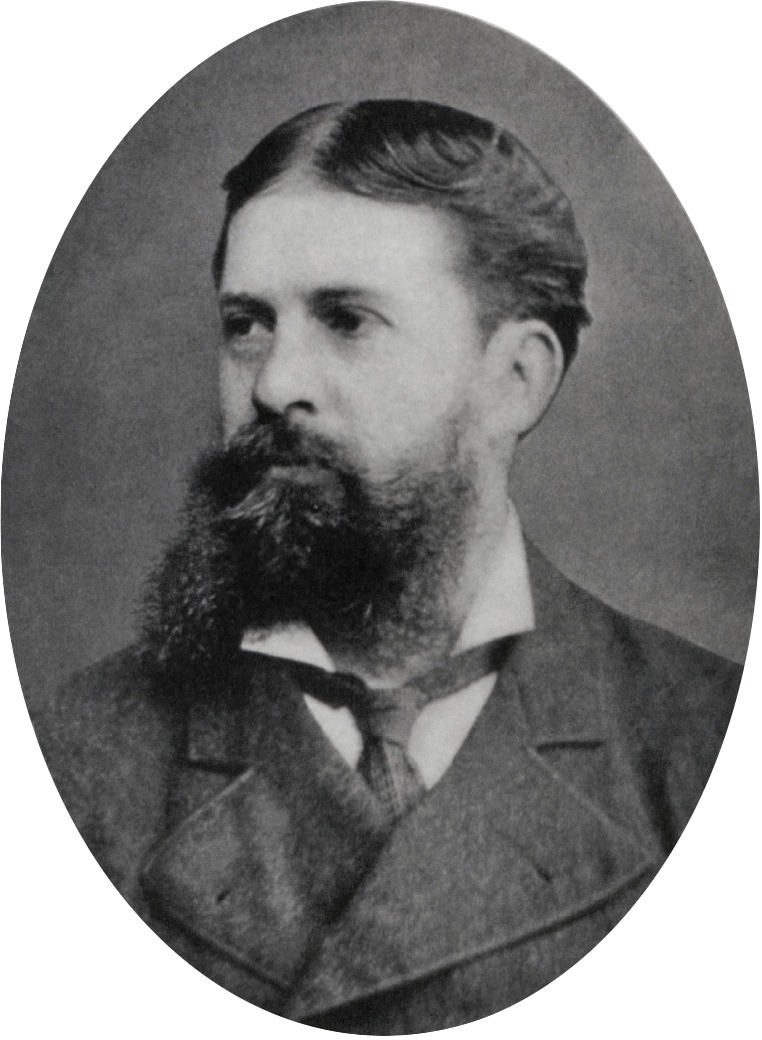 I read C.S. Peirce's "Some Consequences of Four Incapacities" sometime when I was first studying epistemology as an undergrad. I remember thinking, finally, someone I can actually get on board with. What was most telling was that as I moved forward in time the people I was reading became more and more agreeable. I came across it again today, thought it was worth another read. Some of my favorite quotes...
Let us not pretend to doubt in philosophy what we do not doubt in our hearts.Compare that with Montaigne...
...
Philosophy ought to imitate the successful sciences in its methods, so far as to proceed only from tangible premisses which can be subjected to careful scrutiny, and to trust rather to the multitude and variety of its arguments than to the conclusiveness of any one. Its reasoning should not form a chain which is no stronger than its weakest link, but a cable whose fibers may be ever so slender, provided they are sufficiently numerous and intimately connected.
Variety of treatment is as good as consistency. Better in fact: it means being more copious and more useful.Some agreement over variety of treatment, less over consistency and the nature of man.
Thus my language is the sum total of myself; for the man is the thought.A poke from Emerson's Self Reliance...It is hard for man to understand this, because he persists in identifying himself with his will, his power over the animal organism, with brute force. Now the organism is only an instrument of thought. But the identity of a man consists in the consistency of what he does and thinks, and consistency is the intellectual character of a thing; that is, is its expressing something.
A foolish consistency is the hobgoblin of little minds, adored by little statesmen and philosophers and divines.Peirce finishes off with reiterating the need for the community of philosophers and the extent to which reality depends upon agreement.
Finally, as what anything really is, is what it may finally come to be known to be in the ideal state of complete information, so that reality depends on the ultimate decision of the community; so thought is what it is, only by virtue of its addressing a future thought which is in its value as thought identical with it, though more developed. In this way, the existence of thought now depends on what is to be hereafter; so that it has only a potential existence, dependent on the future thought of the community.While I can agree that to an extent reality depends upon agreement I disagree strongly with his last statement and would say instead: The individual man's uniqueness, that which sets him apart from his fellows, is his primary addition. To fail to explore that uniqueness is nihilism.
The individual man, since his separate existence is manifested only by ignorance and error, so far as he is anything apart from his fellows, and from what he and they are to be, is only a negation.
Monday, April 7, 2008
the pressing concerns
Charlie starts to identify the contemporary situation in his comment on that last post --
The questions becomes,
what are the core concerns of our time?
Certainly we need to survey ordinary ecology, atmospheric science, the food situation, the oil situation. Boston pointed me to the costs and lack of benefits associated with bottled water the other day. That's enlightening.
The political situation is insane, I heard James Yee speak for a Hinckley Institute of Politics forum Thursday before last. I also heard Col. Morris Davis speak last friday at an event put on by the law school. I read the news related to these gitmo related catastrophes every day but it impacts you differently when you hear it from the people who were there. Charlie keeps up with Thomas Barnett's blog. I like Glenn Greenwald, among many others. I also peruse National Review (when I can bring myself to do it) and read George Will, I think it's important to also get an outside voice (even when it's stupid or evil, if a large number of people believe it, it's worth listening to for that reason alone). I rely on an investigative reporter friend for my local politics (he hates George Will, something about checking some of his sources). I often get depressed with politics and just shut it all off.
The internet is a subculture of its own and I'm just barely getting some grasp on what that means. I work with people all over the country as well as in Canada and Singapore. If I have an area of expertise, I guess this would be it. I've been working with the Internet since 1995. (I started with a 80386 with a 1200 baud modem and Kermit at home. "trumpet winsock" and then the Windows for Workgroups 3.11 tcp/ip stack at work. I was also maintaining a mail server running DEC Ultrix. For those of you who care.)
Charlie noted recently where we're at with artificial intelligence.
I say all that to peruse what immediately comes to mind. I think this situation is what led me to previously ask these two questions.
To those five or six people who read this blog --my very very limited audience-- what else is there to add here, to give this more meat, what am I missing?
Update: Charlie's engaging this topic at Huenemanniac.
I've been encountering in several places recently reflections on current affairs that make me think the human situation now is truly radically different -- politically, technologically, ecologically, and epistemically (and with all that, probably morally too). It seems to me that somebody should be thinking through these changes and trying to counsel people in handling them in their lives, since clearly evolution cannot keep pace with these changes: we're monkeys playing with the internet and cruise missiles. I don't care what these latter-day counselors are called ("Philosophers"?), but I think there is a crying need for someone to get to work!We're the sorts of animals that have these crazy concerns we need to deal with. We're pushing forward so fast we can't keep up with ourselves. We're in a "radically different" environment which is why what is required could be called a new ecological awareness.
The questions becomes,
what are the core concerns of our time?
Certainly we need to survey ordinary ecology, atmospheric science, the food situation, the oil situation. Boston pointed me to the costs and lack of benefits associated with bottled water the other day. That's enlightening.
The political situation is insane, I heard James Yee speak for a Hinckley Institute of Politics forum Thursday before last. I also heard Col. Morris Davis speak last friday at an event put on by the law school. I read the news related to these gitmo related catastrophes every day but it impacts you differently when you hear it from the people who were there. Charlie keeps up with Thomas Barnett's blog. I like Glenn Greenwald, among many others. I also peruse National Review (when I can bring myself to do it) and read George Will, I think it's important to also get an outside voice (even when it's stupid or evil, if a large number of people believe it, it's worth listening to for that reason alone). I rely on an investigative reporter friend for my local politics (he hates George Will, something about checking some of his sources). I often get depressed with politics and just shut it all off.
The internet is a subculture of its own and I'm just barely getting some grasp on what that means. I work with people all over the country as well as in Canada and Singapore. If I have an area of expertise, I guess this would be it. I've been working with the Internet since 1995. (I started with a 80386 with a 1200 baud modem and Kermit at home. "trumpet winsock" and then the Windows for Workgroups 3.11 tcp/ip stack at work. I was also maintaining a mail server running DEC Ultrix. For those of you who care.)
Charlie noted recently where we're at with artificial intelligence.
I say all that to peruse what immediately comes to mind. I think this situation is what led me to previously ask these two questions.
To those five or six people who read this blog --my very very limited audience-- what else is there to add here, to give this more meat, what am I missing?
Update: Charlie's engaging this topic at Huenemanniac.
Friday, October 26, 2007
proximity and unknown knowledge
There are known knowns, known unknowns, unknown unknowns (a nearly infinite set) and unknown knowns. To restate, there are things you know you know, things you know you don't know, things you don't know that you don't know and things you don't know that you know. When I consider the relationship between proximity and knowledge, the wily unknown knowns inevitably start revealing themselves.
Where do unknown knowns show up? Remember the first time you went to a foreign country? When you're in a foreign country you often know the locals know something that you don't know that they don't know they know. Often the unknown knowns relate to non-verbal things or subtleties in language.
Even in England (we recently visited for the first time), where people speak our same language, the use of particular words and the way people say things is quite different. The Americans who have been there for a while know there were things that took a while to get used to when they first arrrived in the UK but often they don't even know what specifically to tell us as first time visitors. They picked up unknown knowledge and don't know how to articulate it but they do know how to use it. There are also known knowns that people might have and relate to you like "oh, a bap is a roll" when the girl at the counter asks if I want a bap or a toastie (what's with the constant use of the diminutive over there, anyhow?). But along with the knowledge they're aware of, there's a whole set of knowledge (in this case cultural) they're unaware of that they use every day. Although some knowledge might be passed explicitly (known knowledge), unknown knowledge is usually passed implicitly and a required ingredient for this passing of knowledge through experience is proximity. How's this for a formula:
So... if you pick up a book about Africa you might get a lot of known knowledge but if you want unknown knowledge about Africa you probably need to go there.
Confused yet?
PS1 - I usually like to write about a slightly different class of topics -- those things you think you know but you don't know (falsely perceived known knowns) but I know you're all tired of hearing that sort of discussion from me and we all know how it goes.
PS2 - yes I'm having too much fun with language at the expense of clarity
PS3 - don't try to track down unknown knowns unless you intend to make the set extinct
PS4 - are there other, better arguments to be made about why we expect our "experts" on Africa or the Middle East to have actually spent some time in those places? But even there I guess it isn't so often a problem with the expert as much as it is with the decision maker (dilbert).
PS5 - Nods to Donald Rumsfeld here btw ;)
Where do unknown knowns show up? Remember the first time you went to a foreign country? When you're in a foreign country you often know the locals know something that you don't know that they don't know they know. Often the unknown knowns relate to non-verbal things or subtleties in language.
Even in England (we recently visited for the first time), where people speak our same language, the use of particular words and the way people say things is quite different. The Americans who have been there for a while know there were things that took a while to get used to when they first arrrived in the UK but often they don't even know what specifically to tell us as first time visitors. They picked up unknown knowledge and don't know how to articulate it but they do know how to use it. There are also known knowns that people might have and relate to you like "oh, a bap is a roll" when the girl at the counter asks if I want a bap or a toastie (what's with the constant use of the diminutive over there, anyhow?). But along with the knowledge they're aware of, there's a whole set of knowledge (in this case cultural) they're unaware of that they use every day. Although some knowledge might be passed explicitly (known knowledge), unknown knowledge is usually passed implicitly and a required ingredient for this passing of knowledge through experience is proximity. How's this for a formula:
proximity + time + a proper human = unknown knowledgeNote: I would say "a properly functioning human brain" but what's a brain without a human attached?
So... if you pick up a book about Africa you might get a lot of known knowledge but if you want unknown knowledge about Africa you probably need to go there.
Confused yet?
PS1 - I usually like to write about a slightly different class of topics -- those things you think you know but you don't know (falsely perceived known knowns) but I know you're all tired of hearing that sort of discussion from me and we all know how it goes.
PS2 - yes I'm having too much fun with language at the expense of clarity
PS3 - don't try to track down unknown knowns unless you intend to make the set extinct
PS4 - are there other, better arguments to be made about why we expect our "experts" on Africa or the Middle East to have actually spent some time in those places? But even there I guess it isn't so often a problem with the expert as much as it is with the decision maker (dilbert).
PS5 - Nods to Donald Rumsfeld here btw ;)
Sunday, October 21, 2007
two important philosophical questions
Maybe the task of philosophy is not to answer philosophical questions as much as it is to figure out the right questions to pose. Asking the questions gets me focused on the area of thought I'm concerned with and good dialog can contribute to personal progress. With that in mind, here are the questions:
Other thoughts?
firstI'm planning to dedicate some time to each question and ask some friends to do the same. Some thoughts (from a recent conversation) on the first question:
"What is the relationship between proximity and knowledge?""What is the relationship between risk and the meaningful life?"second
- proximity can relate to time, place, causation, etc.
- globalization seems to push us into a predicament where we're often making decisions without proximal knowledge
- can adopting a pre-packaged worldview be a means of avoiding seeking proximal knowledge?
- might we judge the truth/usefulness of a worldview based on the extent to which it advocates seeking proximal knowledge?
- what are some texts which address this question in one way or another (e.g. Hume's argument against miracles, conservationists advocating "buy local")
- do particular political points of view advocate proximal knowledge? States' rights? No child left behind?
- the legal system takes a point of view on this topic, is it fair?
- are there types of knowledge that have no relationship to proximity?
- people have different definitions of risk and meaning
- as humans we're fragile but it's hard to accomplish much in life without risk
- better to live deliberately than to be driven by fear
- to live at all is to take some risks, but a lot of these aren't perceived
- how is our perception of risk formed by society/culture/religion?
Other thoughts?
Subscribe to:
Posts (Atom)

 Posts
Posts


